Review: Deckline
Deckline: A Primitive Exercise in Card-Based Minimalism
In the ever-expanding universe of deckbuilding games, where mechanical innovation and strategic depth have become the expected standard, KREIDPIX’s “Deckline” presents itself as something of an anomaly. This minimalist offering, priced at a mercifully modest $2.69, attempts to marry the traditional Russian card game Durak with atmospheric horror elements set against the backdrop of 1990s Eastern European conflict. The result is a curious artifact that, while occasionally striking in its presentation, ultimately fails to satisfy the sophisticated palate of the discerning deckbuilding connoisseur.
The Mechanical Framework: Rudimentary at Best
Let us begin with the fundamental mechanics, which I found disappointingly primitive. Durak, the traditional Russian card game upon which Deckline is built, offers a competent enough foundation, but hardly qualifies as a proper deckbuilding experience in the contemporary sense. There is no deck construction, no synergistic card combinations to discover, and no emergent strategic pathways to explore. Instead, players engage in a straightforward trump-based card game that any peasant child from pre-revolutionary Russia could comprehend within minutes.
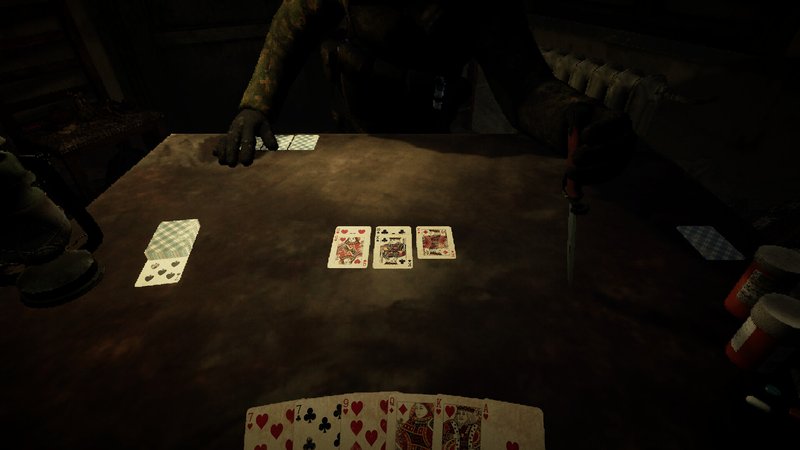
The ruleset, while functional, lacks the intricate decision trees and strategic depth one expects from the genre. Each player receives six cards from a 36-card deck, with a randomly selected trump suit providing the only meaningful strategic variable. Players take turns attacking and defending with cards, drawing replacements until the deck is depleted. The first player to empty their hand emerges victorious—a win condition of such simplicity that it borders on the primitive.
I found myself yearning for the sophisticated card interactions of “Netrunner” or the elegant tableau-building of “Race for the Galaxy”—games that understand the delicate art of creating meaningful choices within constrained decision spaces. Deckline, by contrast, offers a mechanical experience that feels distressingly archaic, like being served gruel when one has developed a palate for foie gras.
Atmospheric Design: A Glimmer of Sophistication
Where Deckline does manage to distinguish itself is in its atmospheric presentation. The developers have crafted a moody, tension-filled visual experience that effectively evokes the grim reality of war-torn Eastern Europe. The chiaroscuro lighting casts long shadows across the weathered playing surface, creating a visual tableau that occasionally approaches the artistic.
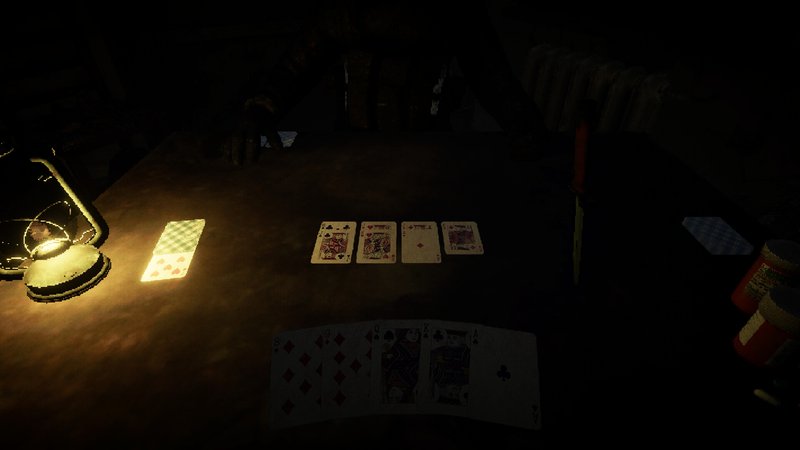
The sound design, though minimalist, contributes effectively to the oppressive atmosphere with distant artillery fire and the muffled sounds of conflict serving as a constant reminder of the narrative context. This attention to environmental storytelling is reminiscent of the more accomplished “Inscryption,” though lacking that title’s mechanical ingenuity and narrative sophistication.
I must reluctantly commend the developers for their commitment to thematic cohesion. The narrative premise—abandoned soldiers playing one final card game as death approaches—provides a contextual framework that elevates what would otherwise be an entirely forgettable experience. The integration of multiple endings in the story mode suggests at least some attempt at narrative branching, though the writing quality fails to approach the literary standards one might hope for.
Production Values: Adequately Austere
The production values of Deckline present something of a paradox. On one hand, the deliberately minimalist approach to visual design serves the thematic elements effectively. On the other, one cannot help but wonder if this aesthetic choice was born of artistic vision or budgetary constraint.
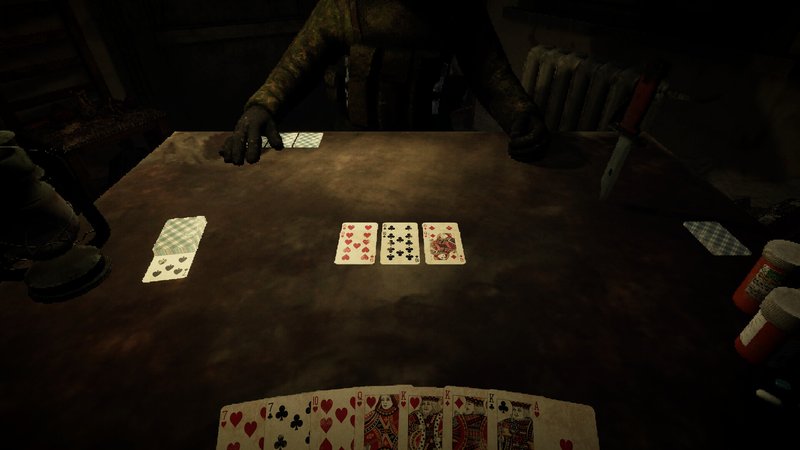
The card designs themselves are unremarkable standard playing cards, lacking the distinctive artistry and tactile quality that elevate games like “Slay the Spire” or “Griftlands.” The environmental assets, while serviceable, exhibit a certain roughness that betrays the game’s indie origins. I found myself jotting notes in my vintage Montblanc fountain pen regarding several visual inconsistencies that a more polished production would have addressed.
The user interface, mercifully, is straightforward and functional, though it lacks the elegant sophistication one finds in more accomplished titles. The absence of advanced options for card organization or strategic information display further reinforces the game’s rudimentary nature.
Replay Value: A Modest Proposition
Deckline’s claims of “unlimited replayability” warrant particular scrutiny. While the core gameplay loop does indeed allow for repeated play sessions, the absence of meaningful progression systems or strategic variability severely undermines this proposition. The inclusion of a global leaderboard provides some external motivation for competitive players, but without substantial mechanical depth, one wonders what precisely is being measured beyond basic competence at a card game invented centuries ago.
The “infinite competitive mode” offers little beyond the base experience, and the randomized gameplay elements fail to introduce sufficient variability to sustain long-term engagement. Unlike “Slay the Spire” with its meticulously balanced character classes and relics, or “Monster Train” with its intricate clan combinations, Deckline offers nothing that evolves or enriches the experience over time.
During my evaluation, I found myself reaching for my phone after approximately 90 minutes—a damning indictment of the game’s capacity to maintain intellectual engagement. Even the most basic deckbuilders typically hold my attention for several hours before their strategic possibilities begin to exhaust themselves.
Comparative Analysis: Dwarfed by Its Betters
When positioned alongside its contemporaries, Deckline’s limitations become painfully apparent. The atmospheric horror card game “Inscryption” demonstrates how effectively narrative and mechanical innovation can intertwine. The obscure Japanese gem “Koi-Koi Hanafuda” shows how even traditional card games can be elevated through thoughtful digital implementation and cultural context.
Deckline, by contrast, feels like a student project that somehow found its way onto Steam—technically competent but lacking the sophisticated design sensibilities that characterize the genre’s standout titles.
Conclusion: An Acquired Taste for the Undiscerning
In the final analysis, Deckline presents itself as a curious artifact that may appeal to those with a particular interest in atmospheric horror or Eastern European military history. Its modest price point ($2.69) appropriately reflects its limited scope and ambition.
For the serious deckbuilding enthusiast, however, Deckline offers little beyond a momentary diversion. The absence of meaningful strategic depth, combined with the limited progression systems and replay value, renders it a minor footnote in the genre’s expanding canon.
While I appreciate the developers’ attempt to create a thematically cohesive experience, I cannot in good conscience recommend Deckline to those who have experienced the sophisticated pleasures of proper deckbuilding games. One might as well play traditional Durak with a physical deck of cards while listening to war documentaries—the experience would be substantially similar and likely more tactilely satisfying.
Deckline earns a modest 4.5 out of 10—a score that acknowledges its atmospheric achievements while recognizing its fundamental limitations as a strategic experience. Perhaps with substantial post-release development and mechanical enrichment, it might yet evolve into something worthy of the serious deckbuilding connoisseur’s attention. Until then, it remains a curiosity rather than a contender.
Elm Whitmore, Ph.D.
Score
Overall Score: 4/10


Developer: KREIDPIX
Release Date: May 7, 2025
Steam Page: Deckline